MU Shorts
Guler, Ceballos, start in a 4-4-2: How Real Madrid could line up against Arandina


On Saturday night, Real Madrid embark on a new journey. They travel to Aranda de Duero to take on fourth-division side Arandina in their first game of this season’s Copa del Rey, a competition that they won last season.
The defending champions, once again, are amongst the overwhelming favourites to run away with the title this season. However, history is a testament that the Spanish Cup is far from as straightforward as it appears on paper.
One reminisces the team’s Round of 32 clash against Cacereno at Principe Felipe last season, a clash where Real Madrid were tested to no end by an inferior opposition and were even on the verge of getting knocked out.
Carlo Ancelotti’s side must thus be on their toes later today, for they face an opposition who have nothing to lose and a lot of prestige gained simply by participating against Real Madrid. Arandina will be fearless, and Los Blancos must be wary.
The Galacticos will be without some of their key stars for the Copa del Rey clash. Toni Kroos misses the game after suffering a knock to his ankle while Lucas Vazquez also does not make the squad list through a long-term injury.
Vinicius Jr and Aurelien Tchouameni have been rested for the game keeping the Spanish Super Cup in mind, with a host of academy players called up to fill the slots. Notably, however, the Copa del Rey has a rule by which at least seven first-team players must be on the field at any point.
With a number of restrictions imposed on his selection, here is how Ancelotti could play his cards against Arandina.
Starters
As confirmed by Carlo Ancelotti in his pre-game press conference, Kepa Arrizabalaga will start in goal against Arandina despite Anriy Lunin’s recent success.
The defensive line will witness wholesale changes. Considering that it is the manager’s last chance to rest key players in the near future, Antonio Rudiger is expected to start on the bench, with Nacho Fernandez and Alvaro Carillo taking over duties at centre-back.
Fran Garcia will continue to start at left-back, while Castilla star Vinicius Tobias is well-placed to start ahead of Daniel Carvajal for the cup encounter.
Eduardo Camavinga has returned to the squad after a long hiatus and will likely enter the starting dynamics immediately tomorrow. He will operate as the pivot alongside Federico Valverde with both Kroos and Tchouameni unavailable.
Arda Guler is expected to make his debut on the night, starting wide on the right side of midfield. Deployed to provide width on the flank, he will likely push higher in attack to combine with, and swap positions with the dynamic forwards.
Dani Ceballos, meanwhile, will start on the left extreme in midfield. Unlike Guler, he is expected to drop centrally during the buildup with the bulk of providing width falling on the shoulders of Garcia.

With Vinicius Jr out of the squad and Rodrygo likely to be rested, Brahim Diaz and Joselu are best placed to start as the forwards. Needless to say, it is a big chance for the duo to prove their mettle and demand regular roles.
Substitutes
Despite starting on the bench, Antonio Rudiger is not one who can be kept out of the dynamics for long. The German star is expected to come on in the second half, albeit based on the game situation.
The same can be said about Rodrygo Goes and Daniel Carvajal, who will start on the bench but arrive on the field based on the team’s situation in the second half.
Real Madrid’s hero, Jude Bellingham is also amongst those who will certainly be rested against Arandina. His ability to score clutch goals almost assures him of a role at some point.
Amongst the academy stars, Alvaro Rodriguez and Nico Paz are likely to be Ancelotti’s preferred options.


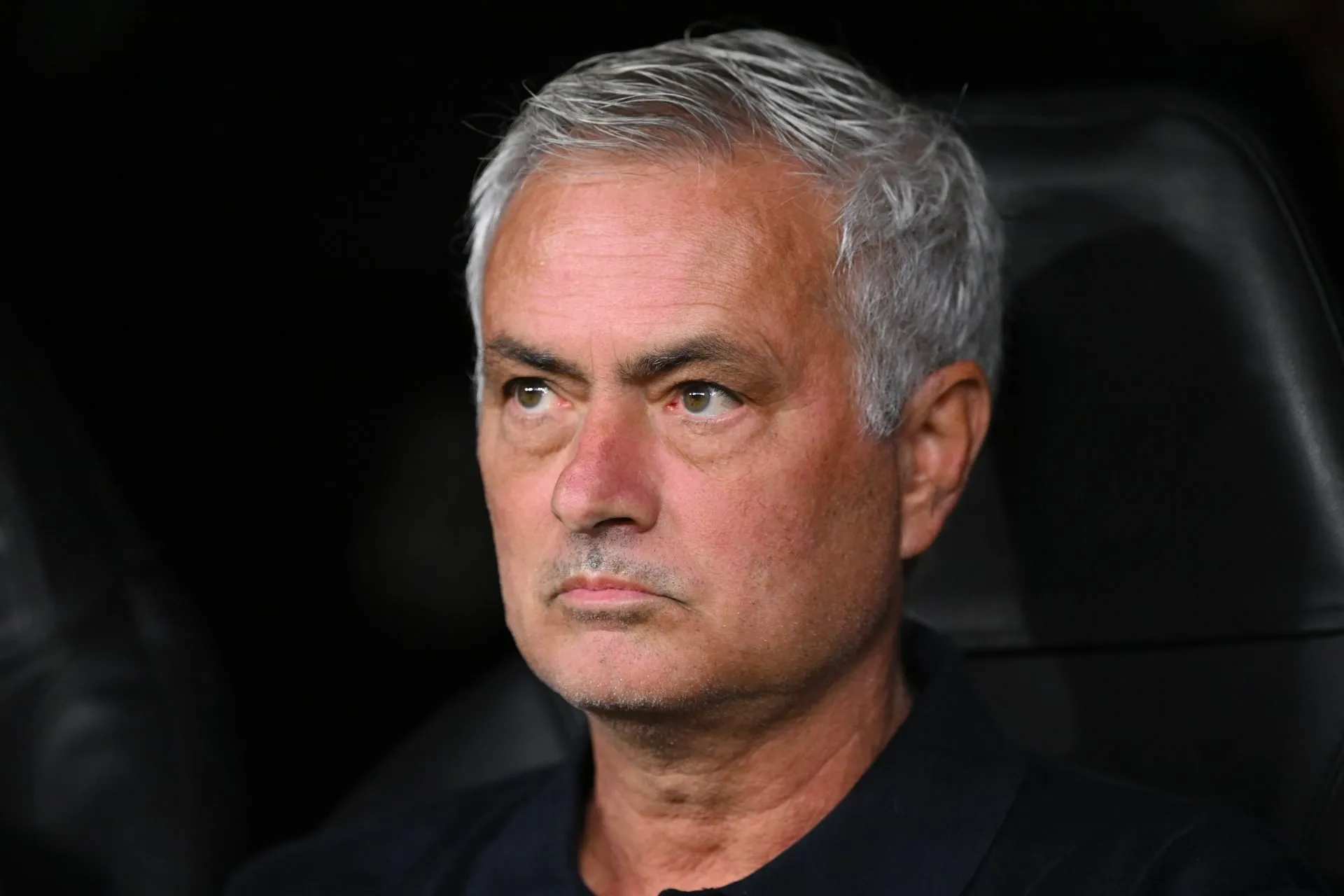
Real Madrid’s season, under the returning Jose Mourinho, has not started as expected at the club.
In terms of results, eight matches have produced six wins one draw and two defeats in all competitions. Both losses have come in La Liga (five wins), leading to the Merengues occupying the fourth place in the table.
Meanwhile, arch-rivals Barcelona have maintained a perfect winning record riding on their relentless goalscoring form, opening up a six-point lead at the table.
Mourinho is using the international break to analyse what has gone wrong and what can be improved. And, several metrics and statistics show that Real Madrid has significant room for improvement.
As highlighted a few days ago, Real Madrid are the team that covers the fewest kilometres per match in La Liga on average, at 96.5, almost ten fewer than Barcelona’s 104.5. Los Blancos are also second-bottom for high-intensity runs per match, with 394.
Possession and defensive numbers
There are further figures suggesting that Real Madrid could be doing more in terms of off-the-ball efforts and defensively.
Real Madrid also happen to be the team that commits the fewest fouls, with 59, fewer than half Espanyol’s 120, yet it is also the team that has been fouled the most in La Liga, with 97.
In terms of recoveries, the Spanish capital giants rank 16th with 302, 38 fewer than Barcelona, while they are also near the bottom for interceptions, ranking 17th.

One argument could be that these figures indicate that Real Madrid are dominating games more often than they are dominated, leaving fewer opportunities to be aggressive without the ball.
However, the numbers do not particularly support that theory either. Real Madrid average 52.3% possession, only slightly more than half.
That is a long way behind Barcelona’s 68.7% and also below Villarreal at 61.4%. Even Atlético Madrid (59.1%) and Real Betis (53.6%) outdo the Merengues.
That possession also allows Barcelona to protect themselves more effectively. The Catalans have conceded just 51 shots, including 22 on target, while Real Madrid have faced 89 shots, with 31 on target.
Finishing not up to the mark either
Real Madrid can improve defensively, but the attacking numbers also reveal significant room for growth.
The biggest issue is finishing. The Merengues have scored 18 goals, 13 fewer than Barcelona’s 31.

That is despite the two teams having taken a similar number of shots: Barça have attempted 150, compared with 131 for Los Blancos. The difference is even smaller when looking at shots on target, with 58 for Barcelona and 53 for Madrid.
Barcelona’s players score once every 1.8 shots on target, while Real Madrid stars needs almost three.
The contrast is particularly clear when comparing the leading scorers for both teams, Raphinha and Kylian Mbappe.
The Brazilian has scored 12 goals from just 25 total shots and 16 shots on target. Real Madrid’s No. 10, meanwhile, has scored seven goals from 41 attempts and 22 shots on target.
The numbers clearly show that Real Madrid have a lot of work to do, both in defence and in attack, if they are to close the gap to the top.
Source: AS