MU Shorts
Not Mbappe or Tchouameni – Three players you may not remember played for Real Madrid and AS Monaco


Real Madrid and AS Monaco are set to face each other tonight in the Champions League, adding yet another storied chapter to a relationship that has grown over the years.
While the focus will naturally be on the action on the pitch, this fixture also highlights a shared history between two clubs that have regularly crossed paths in the transfer market.
In recent seasons, that link has been reinforced by stars such as Aurelien Tchouameni, who made his name in Ligue 1 before becoming a key figure at the Santiago Bernabeu, and Kylian Mbappe, whose rise at Monaco paved the way for his long-anticipated move to Madrid.
Their journeys underline Monaco’s reputation as a breeding ground for elite talent and Real Madrid’s habit of snapping up players ready for the very top.
However, long before Tchouameni’s authority in midfield and Mbappe’s global superstardom, several other players had already worn the colours of both clubs.
Some arrived in Madrid as established names, others left Monaco to take the biggest step of their careers.
Here are three players who represented both Real Madrid and AS Monaco.
James Rodriguez

James Rodriguez’s connection with Monaco was brief but hugely important. He joined the Ligue 1 side in 2013 from Porto for around €45 million as part of Monaco’s ambitious rebuild.
In his only season at the club, James made 38 appearances in all competitions, scoring 10 goals and quickly becoming the creative heartbeat of the team.
That campaign set the stage for a major move. After starring at the 2014 World Cup, Real Madrid signed James in the summer of 2014 for roughly €80 million.
Over six seasons at the Bernabeu, including loan spells away, he made 125 appearances and scored 37 goals.
He officially left Real Madrid in 2020, joining Everton on a free transfer after his contract ended.
Fabinho

Fabinho’s Real Madrid story is often forgotten. He arrived in 2012 on loan from Rio Ave and was mainly used by Castilla, making just one senior appearance for the first team.
Madrid chose not to sign him permanently, and he returned to Portugal in 2013.
Monaco then secured Fabinho for around €6 million, a move that proved inspired.
He spent five seasons at the club, making over 230 appearances and evolving into one of Europe’s most reliable midfielders.
Fabinho left Monaco in 2018 after their title-winning 2016–17 season, joining Liverpool for approximately €45 million.
Fabio Coentrao

Fabio Coentrao joined Real Madrid from Benfica in 2011 for around €30 million.
Across six seasons, he made 106 appearances, winning major honours despite frequent injury setbacks. His time in Madrid ended in 2017 when his contract expired.
Monaco brought him in on loan for the 2015–16 season. There, Coentrao made 19 appearances, offering experience during a transitional year.
He left Monaco in 2016 and, a few years later, stepped away from top-level football.


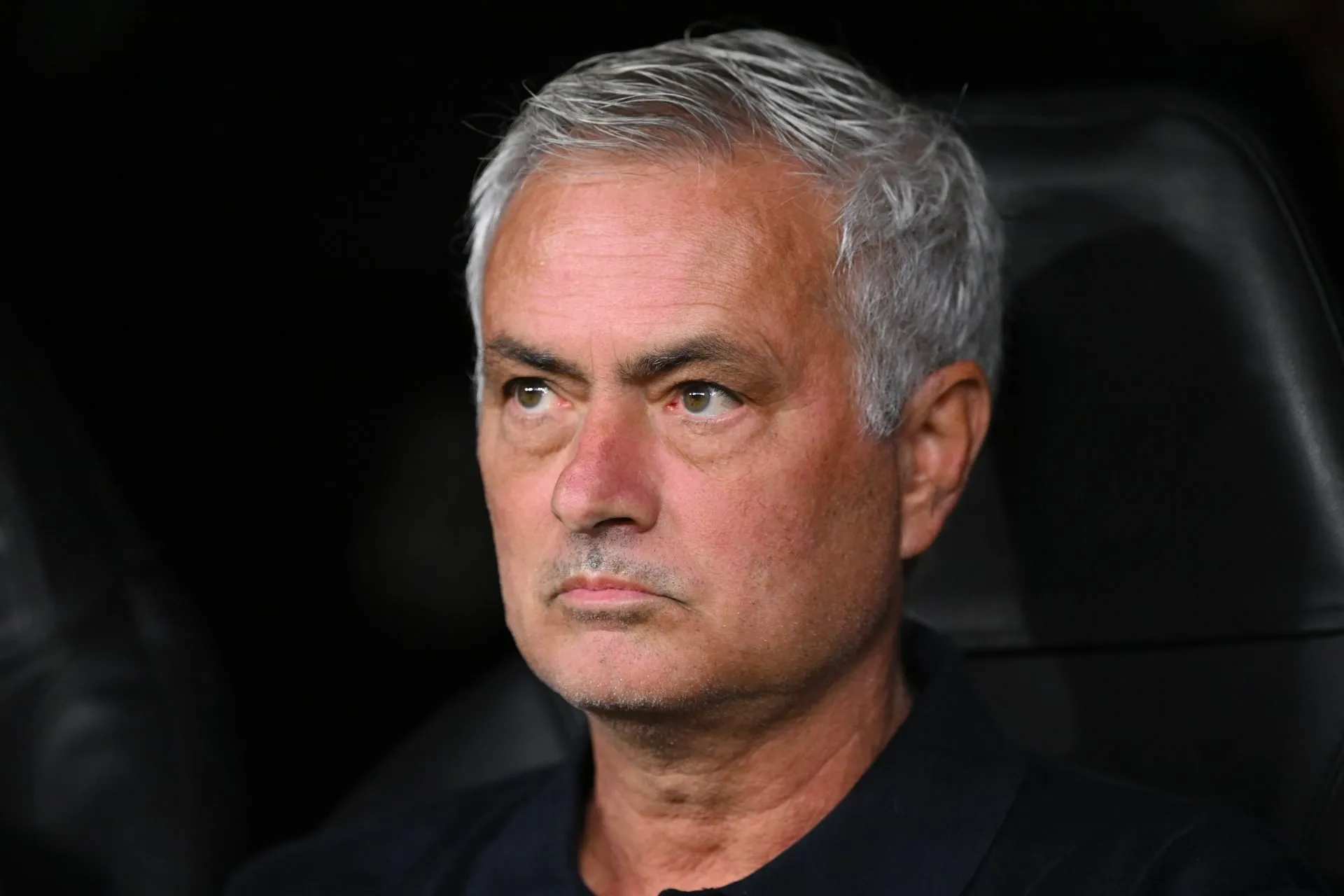
Real Madrid’s season, under the returning Jose Mourinho, has not started as expected at the club.
In terms of results, eight matches have produced six wins one draw and two defeats in all competitions. Both losses have come in La Liga (five wins), leading to the Merengues occupying the fourth place in the table.
Meanwhile, arch-rivals Barcelona have maintained a perfect winning record riding on their relentless goalscoring form, opening up a six-point lead at the table.
Mourinho is using the international break to analyse what has gone wrong and what can be improved. And, several metrics and statistics show that Real Madrid has significant room for improvement.
As highlighted a few days ago, Real Madrid are the team that covers the fewest kilometres per match in La Liga on average, at 96.5, almost ten fewer than Barcelona’s 104.5. Los Blancos are also second-bottom for high-intensity runs per match, with 394.
Possession and defensive numbers
There are further figures suggesting that Real Madrid could be doing more in terms of off-the-ball efforts and defensively.
Real Madrid also happen to be the team that commits the fewest fouls, with 59, fewer than half Espanyol’s 120, yet it is also the team that has been fouled the most in La Liga, with 97.
In terms of recoveries, the Spanish capital giants rank 16th with 302, 38 fewer than Barcelona, while they are also near the bottom for interceptions, ranking 17th.

One argument could be that these figures indicate that Real Madrid are dominating games more often than they are dominated, leaving fewer opportunities to be aggressive without the ball.
However, the numbers do not particularly support that theory either. Real Madrid average 52.3% possession, only slightly more than half.
That is a long way behind Barcelona’s 68.7% and also below Villarreal at 61.4%. Even Atlético Madrid (59.1%) and Real Betis (53.6%) outdo the Merengues.
That possession also allows Barcelona to protect themselves more effectively. The Catalans have conceded just 51 shots, including 22 on target, while Real Madrid have faced 89 shots, with 31 on target.
Finishing not up to the mark either
Real Madrid can improve defensively, but the attacking numbers also reveal significant room for growth.
The biggest issue is finishing. The Merengues have scored 18 goals, 13 fewer than Barcelona’s 31.

That is despite the two teams having taken a similar number of shots: Barça have attempted 150, compared with 131 for Los Blancos. The difference is even smaller when looking at shots on target, with 58 for Barcelona and 53 for Madrid.
Barcelona’s players score once every 1.8 shots on target, while Real Madrid stars needs almost three.
The contrast is particularly clear when comparing the leading scorers for both teams, Raphinha and Kylian Mbappe.
The Brazilian has scored 12 goals from just 25 total shots and 16 shots on target. Real Madrid’s No. 10, meanwhile, has scored seven goals from 41 attempts and 22 shots on target.
The numbers clearly show that Real Madrid have a lot of work to do, both in defence and in attack, if they are to close the gap to the top.
Source: AS