MU Shorts
Real Madrid’s ‘real problem’ may not be the bench – It is inside the dressing room


At some point, patterns stop being coincidental and start becoming reality.
For Real Madrid, another trophyless season is forcing a difficult but necessary question: Is the problem really the managers, or something much deeper?
In less than 12 months, the club has already cycled through three managers, and now even Alvaro Arbeloa finds his future hanging in the balance.
If he departs, which is a certainty, he will become the third managerial casualty in a single year, meaning by the summer, the team will have its fourth manager in nearly a year.
This is a statistic that points towards instability at a structural level rather than isolated failures.
Mbappe’s arrival and further destruction
When different managers fail under similar circumstances, attention inevitably shifts towards the players.
In that context, the arrival of Kylian Mbappe appears to have been a turning point, but not necessarily in the way many expected.
On paper, signing one of the world’s best players should elevate a squad. Instead, it seems to have disrupted an already delicate balance.
Before Mbappe’s arrival, the hierarchy within the squad was at its peak.
Players like Vinicius Jr. and Jude Bellingham were naturally emerging as leaders, driving the team forward through strong performance.
But the introduction of a global superstar altered that dynamic, creating a shift not just in roles, but in perception and status.
The issue is not competition, as top teams like Real Madrid thrive on it. Rather, the problem is when status outweighs structure.
Three managers have failed

Managers like Carlo Ancelotti, Xabi Alonso, and now Arbeloa have all faced similar challenges.
Each has made tactical errors, yes, but the recurring theme has been their struggle to fully control a dressing room filled with strong personalities and established egos.
Ancelotti, in his final stretch, appeared to prioritise stability over confrontation.
Known for his calm authority, he chose to go through the situation carefully rather than risk open conflict, even as signs of disconnect between the squad and coaching staff became increasingly visible on the pitch.
Alonso’s tenure, meanwhile, happened more publicly. His tensions with Vinicius complicated his authority within the group, and ultimately, the club’s decision to back the player over the manager sent a powerful message.
That message may have long-term consequences, as it more or less conveyed the idea that player influence had reached a level where it could directly influence managerial futures.
Then there is Arbeloa
Now, with Arbeloa, the situation appears slightly different, but not necessarily resolved.
While he has managed to bring a degree of calm to parts of the squad, cracks are still evident.
Reports of friction involving players like Dani Carvajal and Dani Ceballos show that tensions have not disappeared. Instead, they have simply shifted.
Interestingly, a section of the dressing room is said to support Arbeloa’s continuity.
But that backing shows uncertainty about what comes next and whether a new manager would challenge the existing power dynamics more aggressively.
This is where the real issue lies.
Real Madrid are not lacking talent, nor are they short of tactical ideas. What they are struggling with is control – the ability to establish a clear hierarchy where the manager’s authority is unquestioned.
Until that balance is restored, changing coaches will continue to be a temporary solution to a deeper problem.


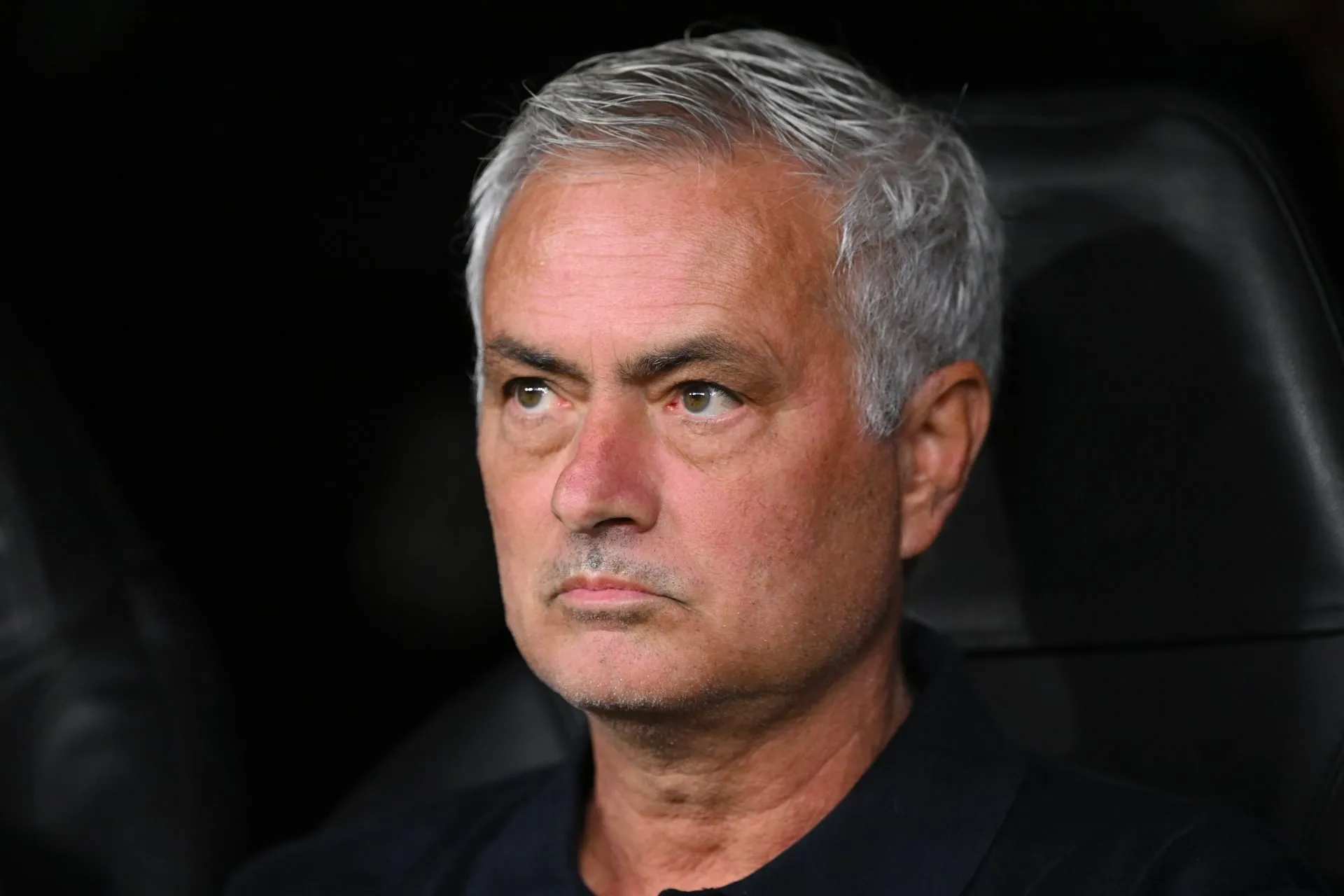
Real Madrid’s season, under the returning Jose Mourinho, has not started as expected at the club.
In terms of results, eight matches have produced six wins one draw and two defeats in all competitions. Both losses have come in La Liga (five wins), leading to the Merengues occupying the fourth place in the table.
Meanwhile, arch-rivals Barcelona have maintained a perfect winning record riding on their relentless goalscoring form, opening up a six-point lead at the table.
Mourinho is using the international break to analyse what has gone wrong and what can be improved. And, several metrics and statistics show that Real Madrid has significant room for improvement.
As highlighted a few days ago, Real Madrid are the team that covers the fewest kilometres per match in La Liga on average, at 96.5, almost ten fewer than Barcelona’s 104.5. Los Blancos are also second-bottom for high-intensity runs per match, with 394.
Possession and defensive numbers
There are further figures suggesting that Real Madrid could be doing more in terms of off-the-ball efforts and defensively.
Real Madrid also happen to be the team that commits the fewest fouls, with 59, fewer than half Espanyol’s 120, yet it is also the team that has been fouled the most in La Liga, with 97.
In terms of recoveries, the Spanish capital giants rank 16th with 302, 38 fewer than Barcelona, while they are also near the bottom for interceptions, ranking 17th.

One argument could be that these figures indicate that Real Madrid are dominating games more often than they are dominated, leaving fewer opportunities to be aggressive without the ball.
However, the numbers do not particularly support that theory either. Real Madrid average 52.3% possession, only slightly more than half.
That is a long way behind Barcelona’s 68.7% and also below Villarreal at 61.4%. Even Atlético Madrid (59.1%) and Real Betis (53.6%) outdo the Merengues.
That possession also allows Barcelona to protect themselves more effectively. The Catalans have conceded just 51 shots, including 22 on target, while Real Madrid have faced 89 shots, with 31 on target.
Finishing not up to the mark either
Real Madrid can improve defensively, but the attacking numbers also reveal significant room for growth.
The biggest issue is finishing. The Merengues have scored 18 goals, 13 fewer than Barcelona’s 31.

That is despite the two teams having taken a similar number of shots: Barça have attempted 150, compared with 131 for Los Blancos. The difference is even smaller when looking at shots on target, with 58 for Barcelona and 53 for Madrid.
Barcelona’s players score once every 1.8 shots on target, while Real Madrid stars needs almost three.
The contrast is particularly clear when comparing the leading scorers for both teams, Raphinha and Kylian Mbappe.
The Brazilian has scored 12 goals from just 25 total shots and 16 shots on target. Real Madrid’s No. 10, meanwhile, has scored seven goals from 41 attempts and 22 shots on target.
The numbers clearly show that Real Madrid have a lot of work to do, both in defence and in attack, if they are to close the gap to the top.
Source: AS