MU Shorts
Three famous players you might have forgotten played for both Real Madrid and Inter Milan


Real Madrid and Inter Milan are two clubs where history carries an unusual amount of weight.
The white shirt of Real Madrid and the famous black-and-blue stripes of Inter have been worn by some of football’s greatest players, with both clubs demanding not only talent but the ability to handle enormous expectations.
Moving between the two is therefore no ordinary career decision.
The clubs operate in different football cultures, compete in different domestic environments and have their own tactical traditions, but the pressure attached to representing either institution is remarkably similar.
Despite that, a select group of players have experienced both worlds.
Some arrived at Real Madrid after making their name in Italy, while another made his reputation in Madrid before becoming a key figure in one of Inter’s greatest teams.
On that note, here are three footballers you might have forgotten who represented both Real Madrid and Inter Milan during their careers.
Roberto Carlos: From Inter disappointment to Real Madrid legend

Few players are as synonymous with Real Madrid as Roberto Carlos.
The Brazilian left-back became a cult hero at the Santiago Bernabeu, but his European journey took him to Italy before Madrid. In 1995, he joined Inter Milan and spent one season with the Nerazzurri.
It was a productive campaign on an individual level. Roberto Carlos made 34 appearances and scored seven goals, which is an extraordinary return for a defender and an early indication of the attacking qualities that would eventually make him one of the most recognisable full-backs in football.
His time in Milan, though, lasted only a season.
Real Madrid moved to sign him, and the transfer proved to be one of the most important pieces of business in the club’s modern history.
Roberto Carlos would spend 11 seasons in the Spanish capital and establish himself as one of the defining players of his generation.
Across his Madrid career, he made 584 appearances in all competitions and scored 71 goals.
During his time, the Brazilian won four La Liga titles and was part of the team that reached three Champions League finals in 1998, 2000 and 2002. Madrid won all three.
The 2002 final against Bayer Leverkusen produced one of the defining moments of that era.
Roberto Carlos delivered the cross that Zinedine Zidane spectacularly converted for the winning goal, securing another European crown for Madrid.
Fabio Cannavaro: A Ballon d’Or winner in Madrid

Fabio Cannavaro’s connection with both clubs is perhaps less widely remembered, particularly because the Italian defender’s reputation is strongly associated with his homeland and Real Madrid.
Cannavaro developed through Napoli and Parma before earning a move to Inter Milan in 2002.
The Nerazzurri reportedly paid around €23 million for the centre-back, handing him a four-year contract.
His start at Inter was encouraging, but the relationship eventually became complicated.
Cannavaro left the club in 2004 and joined Juventus, where he spent two seasons before another major move changed the course of his career.
In 2006, Real Madrid signed him from Juventus for a reported €7 million.
That same year, he captained Italy to World Cup glory and produced a series of outstanding performances during the tournament.
His achievements were recognised on an individual level too, as he won the 2006 Ballon d’Or and FIFA World Player of the Year award.
Cannavaro spent three seasons at Real Madrid and added domestic success to his already extraordinary year.
He won La Liga in both the 2006-07 and 2007-08 seasons, becoming an important defensive figure during Madrid’s successful campaigns.
His Inter career never reached the same heights, and Cannavaro himself has spoken critically about aspects of his experience there.
But his journey from Inter to Juventus and eventually Real Madrid produced one of the most decorated defensive careers of his generation.
Esteban Cambiasso: Madrid academy product turned Inter great

Esteban Cambiasso’s story is arguably the most interesting of the three because, unlike Roberto Carlos and Cannavaro, he began his connection with Real Madrid at youth level.
The Argentine midfielder joined Madrid’s academy at a young age alongside his brother Nicolas.
After returning to Argentina to gain regular first-team football with Independiente and River Plate, Cambiasso eventually returned to Madrid.
He became part of the first-team setup in 2002 and enjoyed a trophy-winning spell with the club.
Cambiasso won La Liga, the Intercontinental Cup, the UEFA Super Cup and the Spanish Super Cup during his time in Madrid.
Yet his stay in the Spanish capital ultimately came to an end when his contract expired in 2004 and the club decided against renewing it.
That decision opened the door to Inter, where he truly established himself as one of the finest midfielders of his generation.
He spent a decade with the Nerazzurri, becoming an important figure in one of the most successful periods in the club’s history.
Cambiasso won five league titles during his time at Inter and became particularly important in Jose Mourinho’s side.
In the 2009-10 season, Cambiaso’s Inter won the Champions League by defeating Bayern Munich in the final, completing a historic treble.


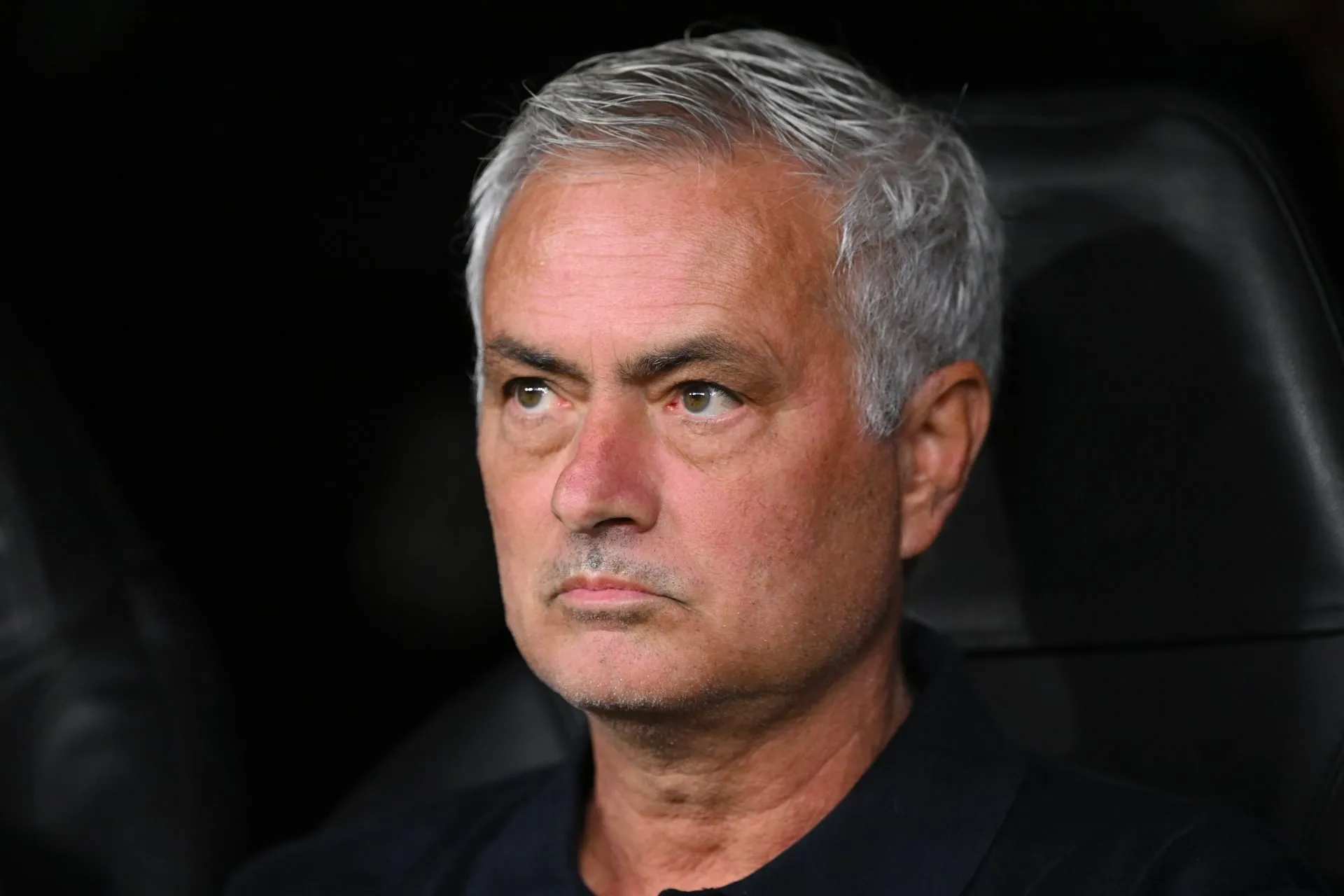
Real Madrid’s season, under the returning Jose Mourinho, has not started as expected at the club.
In terms of results, eight matches have produced six wins one draw and two defeats in all competitions. Both losses have come in La Liga (five wins), leading to the Merengues occupying the fourth place in the table.
Meanwhile, arch-rivals Barcelona have maintained a perfect winning record riding on their relentless goalscoring form, opening up a six-point lead at the table.
Mourinho is using the international break to analyse what has gone wrong and what can be improved. And, several metrics and statistics show that Real Madrid has significant room for improvement.
As highlighted a few days ago, Real Madrid are the team that covers the fewest kilometres per match in La Liga on average, at 96.5, almost ten fewer than Barcelona’s 104.5. Los Blancos are also second-bottom for high-intensity runs per match, with 394.
Possession and defensive numbers
There are further figures suggesting that Real Madrid could be doing more in terms of off-the-ball efforts and defensively.
Real Madrid also happen to be the team that commits the fewest fouls, with 59, fewer than half Espanyol’s 120, yet it is also the team that has been fouled the most in La Liga, with 97.
In terms of recoveries, the Spanish capital giants rank 16th with 302, 38 fewer than Barcelona, while they are also near the bottom for interceptions, ranking 17th.

One argument could be that these figures indicate that Real Madrid are dominating games more often than they are dominated, leaving fewer opportunities to be aggressive without the ball.
However, the numbers do not particularly support that theory either. Real Madrid average 52.3% possession, only slightly more than half.
That is a long way behind Barcelona’s 68.7% and also below Villarreal at 61.4%. Even Atlético Madrid (59.1%) and Real Betis (53.6%) outdo the Merengues.
That possession also allows Barcelona to protect themselves more effectively. The Catalans have conceded just 51 shots, including 22 on target, while Real Madrid have faced 89 shots, with 31 on target.
Finishing not up to the mark either
Real Madrid can improve defensively, but the attacking numbers also reveal significant room for growth.
The biggest issue is finishing. The Merengues have scored 18 goals, 13 fewer than Barcelona’s 31.

That is despite the two teams having taken a similar number of shots: Barça have attempted 150, compared with 131 for Los Blancos. The difference is even smaller when looking at shots on target, with 58 for Barcelona and 53 for Madrid.
Barcelona’s players score once every 1.8 shots on target, while Real Madrid stars needs almost three.
The contrast is particularly clear when comparing the leading scorers for both teams, Raphinha and Kylian Mbappe.
The Brazilian has scored 12 goals from just 25 total shots and 16 shots on target. Real Madrid’s No. 10, meanwhile, has scored seven goals from 41 attempts and 22 shots on target.
The numbers clearly show that Real Madrid have a lot of work to do, both in defence and in attack, if they are to close the gap to the top.
Source: AS