MU Shorts
Three ways Xabi Alonso can improve his team to turn the situation around at Real Madrid


Xabi Alonso’s days at Real Madrid appear numbered if the team’s form continues to follow the same trend, and there is a serious need to improve results quickly.
Reports suggest the game against Deportivo Alaves could be the manager’s final game in his new position, although a lot will depend on the result and the manner of its infliction.
From Alonso’s point of view, however, there is little time, and many a problem to fix for the side have looked dysfunctional for a while now. The situation, however, is not hopeless, for there appear to be a few straightforward ways to help them recover their form.
Madrid Universal brings you three ways Xabi Alonso can turn Real Madrid’s fortunes around.
Defend set-pieces better
One factor that closely correlates with all of Real Madrid’s defeats this season is the poor defending from set-pieces.
Barring the loss to Celta Vigo in La Liga, all three big game defeats for Los Blancos this season have been dictated by set-piece goals for the opposition – something that should not be happening at the level that Real Madrid operate at.

Against Atletico Madrid, Real Madrid conceded from three set-pieces in what was arguably their worst showing of the season.
Alexis McAllister scored a header off a set-piece to inflict the blow on Real Madrid in the team’s defeat to Liverpool, while Manchester City also scored their equaliser against Real Madrid off a set-piece.
The team’s defending against set-pieces, thus, requires a serious revamp, especially in terms of marking the right men. After all, it was almost comical watching Arda Guler marking Erling Haaland given the height difference between the players.
Attack from the right-wing
What stood out in Real Madrid’s game against Manchester City was Rodrygo’s performance and goal scored from the right wing, and it was clear that the Blues did not anticipate that coming from a long way out.
With Vinicius Jr starting on the left flank and Kylian Mbappe also more comfortable drifting in from that side, teams have often overloaded their defensive resources on the left side to curb Real Madrid’s attack.
The predictable nature of Real Madrid’s game and buildup from the left flank, needless to say, does not help their case and helps the opposition plan better, given that they know exactly where the attacks are arriving from.
Los Blancos, thus, must look to attack equally from both wings to keep opposition defences under uncertainty. Rodrygo’s return to form and Franco Mastantuono’s return, needless to say, will help the team in that respect.
Penalty box poacher
Kylian Mbappe has well and truly embraced the goalscoring responsibility at Real Madrid this season and is scoring goals for fun. What the team are lacking, however, is a genuine aerial threat given that Mbappe usually scores grounded goals.

The arrival of Trent Alexander-Arnold and Alvaro Carreras gives the side two potent full-backs who can deliver lethal crosses. However, there is no player who can capitalise on such chances with a predator’s instinct.
Mbappe may not provide an aerial threat, but Endrick has that potential in him, as seen in his cameo against Manchester City, where he came close to scoring a header that clipped the crossbar. Vinicius Jr. too, in fact, had two decent headers.
Real Madrid have historically been clinical in the air with lethal aerial threats in the likes of Cristiano Ronaldo, Gareth Bale, and Karim Benzema, and it is time they look to unlock that facet of their game once more.


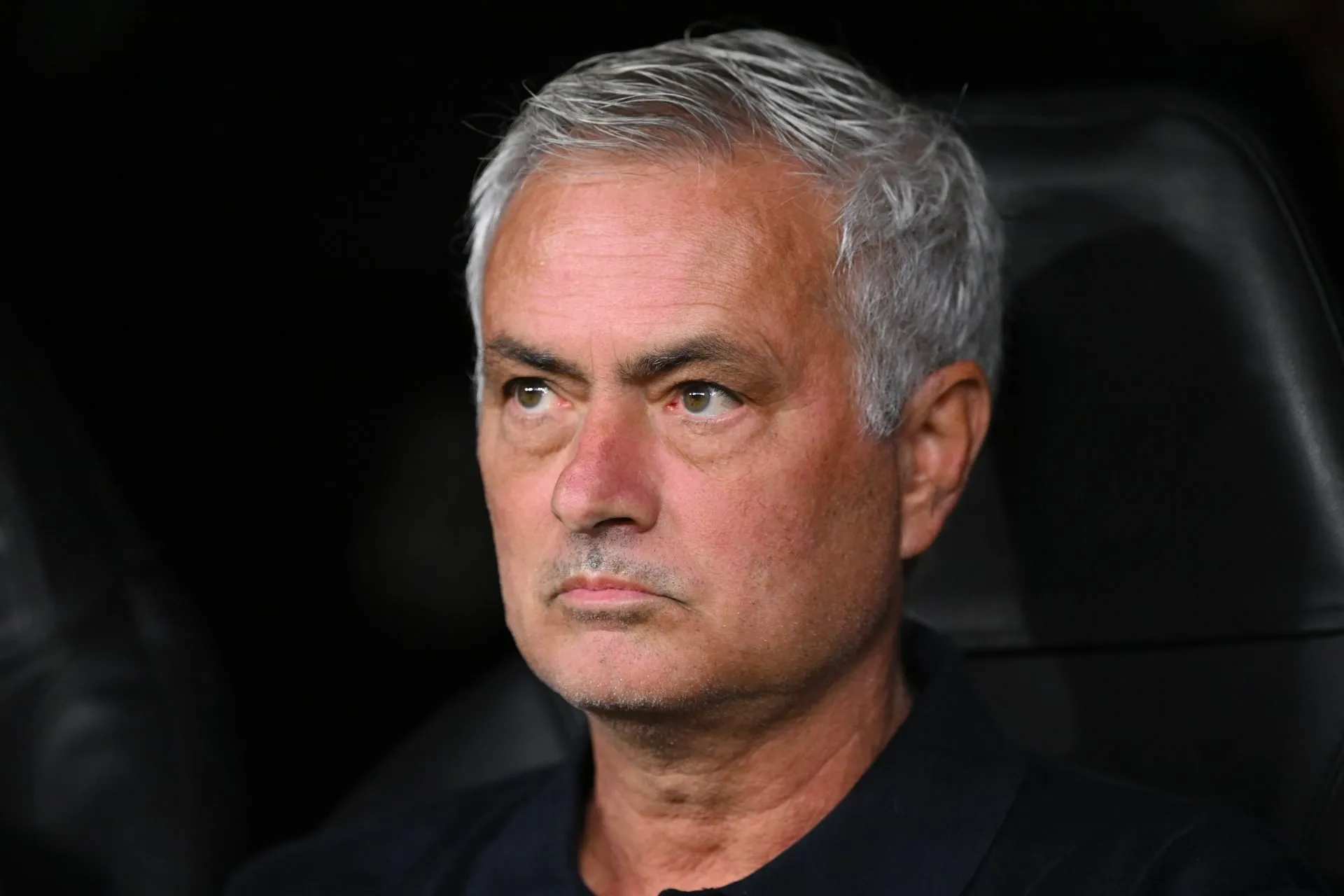
Real Madrid’s season, under the returning Jose Mourinho, has not started as expected at the club.
In terms of results, eight matches have produced six wins one draw and two defeats in all competitions. Both losses have come in La Liga (five wins), leading to the Merengues occupying the fourth place in the table.
Meanwhile, arch-rivals Barcelona have maintained a perfect winning record riding on their relentless goalscoring form, opening up a six-point lead at the table.
Mourinho is using the international break to analyse what has gone wrong and what can be improved. And, several metrics and statistics show that Real Madrid has significant room for improvement.
As highlighted a few days ago, Real Madrid are the team that covers the fewest kilometres per match in La Liga on average, at 96.5, almost ten fewer than Barcelona’s 104.5. Los Blancos are also second-bottom for high-intensity runs per match, with 394.
Possession and defensive numbers
There are further figures suggesting that Real Madrid could be doing more in terms of off-the-ball efforts and defensively.
Real Madrid also happen to be the team that commits the fewest fouls, with 59, fewer than half Espanyol’s 120, yet it is also the team that has been fouled the most in La Liga, with 97.
In terms of recoveries, the Spanish capital giants rank 16th with 302, 38 fewer than Barcelona, while they are also near the bottom for interceptions, ranking 17th.

One argument could be that these figures indicate that Real Madrid are dominating games more often than they are dominated, leaving fewer opportunities to be aggressive without the ball.
However, the numbers do not particularly support that theory either. Real Madrid average 52.3% possession, only slightly more than half.
That is a long way behind Barcelona’s 68.7% and also below Villarreal at 61.4%. Even Atlético Madrid (59.1%) and Real Betis (53.6%) outdo the Merengues.
That possession also allows Barcelona to protect themselves more effectively. The Catalans have conceded just 51 shots, including 22 on target, while Real Madrid have faced 89 shots, with 31 on target.
Finishing not up to the mark either
Real Madrid can improve defensively, but the attacking numbers also reveal significant room for growth.
The biggest issue is finishing. The Merengues have scored 18 goals, 13 fewer than Barcelona’s 31.

That is despite the two teams having taken a similar number of shots: Barça have attempted 150, compared with 131 for Los Blancos. The difference is even smaller when looking at shots on target, with 58 for Barcelona and 53 for Madrid.
Barcelona’s players score once every 1.8 shots on target, while Real Madrid stars needs almost three.
The contrast is particularly clear when comparing the leading scorers for both teams, Raphinha and Kylian Mbappe.
The Brazilian has scored 12 goals from just 25 total shots and 16 shots on target. Real Madrid’s No. 10, meanwhile, has scored seven goals from 41 attempts and 22 shots on target.
The numbers clearly show that Real Madrid have a lot of work to do, both in defence and in attack, if they are to close the gap to the top.
Source: AS