MU Shorts
Why Xabi Alonso and Vinicius need to make peace after the Clasico fallout


One of the many headline-catching developments in the recent El Clasico was Vinicius Jr.’s altercation with Xabi Alonso during the time of his substitution – a situation that did not leave a pretty image of the relationship between the duo.
On seeing his name go up on the assistant’s board signalling that his time on the field had come to an end, the Brazilian star did not hold back and made his displeasure very clear to the manager and everyone on the field.
He hit out at Alonso, complained deeply about how he was frustrated with constantly being hooked off, and stormed into the dressing room before eventually coming back.
Since then, however, word has it that all is not well between the manager and player, with reports even suggesting that they might find it difficult to coexist if the situation does not improve.
From Real Madrid’s perspective, the situation is deeply worrying and unfavourable as the rift between the manager and a star player does not bode well. It is, after all, in both Alonso and Vinicius’ best interest to put it aside and move on from the episode.
From Alonso’s perspective

Alonso arrived at Real Madrid with a clear idea of not maintaining any favourites so as to equitably distribute minutes based on merit.
Vinicius on that front, has come a long way on the manager’s pecking order from initially being benched without hesitation to now taking the role of a bonafide starter.
Alonso cannot be faulted for opting to substitute the player out on occasion, especially given how Kylian Mbappe’s form essentially renders him irreplaceable.
Maintaining anger toward the Brazilian for his reaction and punishing him, however, may not be the route forward either given how it could easily affect the player’s future at the club.
Vinicius is one of the best players on the planet in his position and has been steadily regaining form over the past few weeks to return to being a game-changer for the team.
Going forward, he will be one of the pillars of Alonso’s project and the manager must not look to aggravate the already inflamed situation until it becomes irreparable.
From the player’s perspective

Vinicius has always been one to not mince his words and filter his thoughts before broadcasting them, and it is precisely that habit that has gotten him into trouble on numerous occasions.
While the player’s disappointment at being substituted was indeed understandable and natural, the 25-year-old megastar is now past that stage in his career where he can be given a pass on it.
Now already one of the leaders of the dressing room and a captain of the team, one expects him to lead from the front and such overt display of his frustration does not set a good example.
It is high time Vinicius understands the responsibility that comes with being a club mainstay and acts per his post in the dressing room. Making a massive issue of the recent event, thus, will not serve him well.
If the player does indeed dream of winning the Ballon d’Or one day, professional conduct and a positive attitude form fundamental criteria in addition to mere trophies. It is, thus, high time he begins working on that aspect of his personality and builds his legacy.
Conclusion
At this point, there is little to gain from letting the tension drag on. Real Madrid have bigger battles ahead than a standoff between their coach and one of their brightest stars.
Both are too important to the club’s immediate future to let pride get in the way. If they can put this behind them, the team wins, the fans win, and both men protect their own legacies.


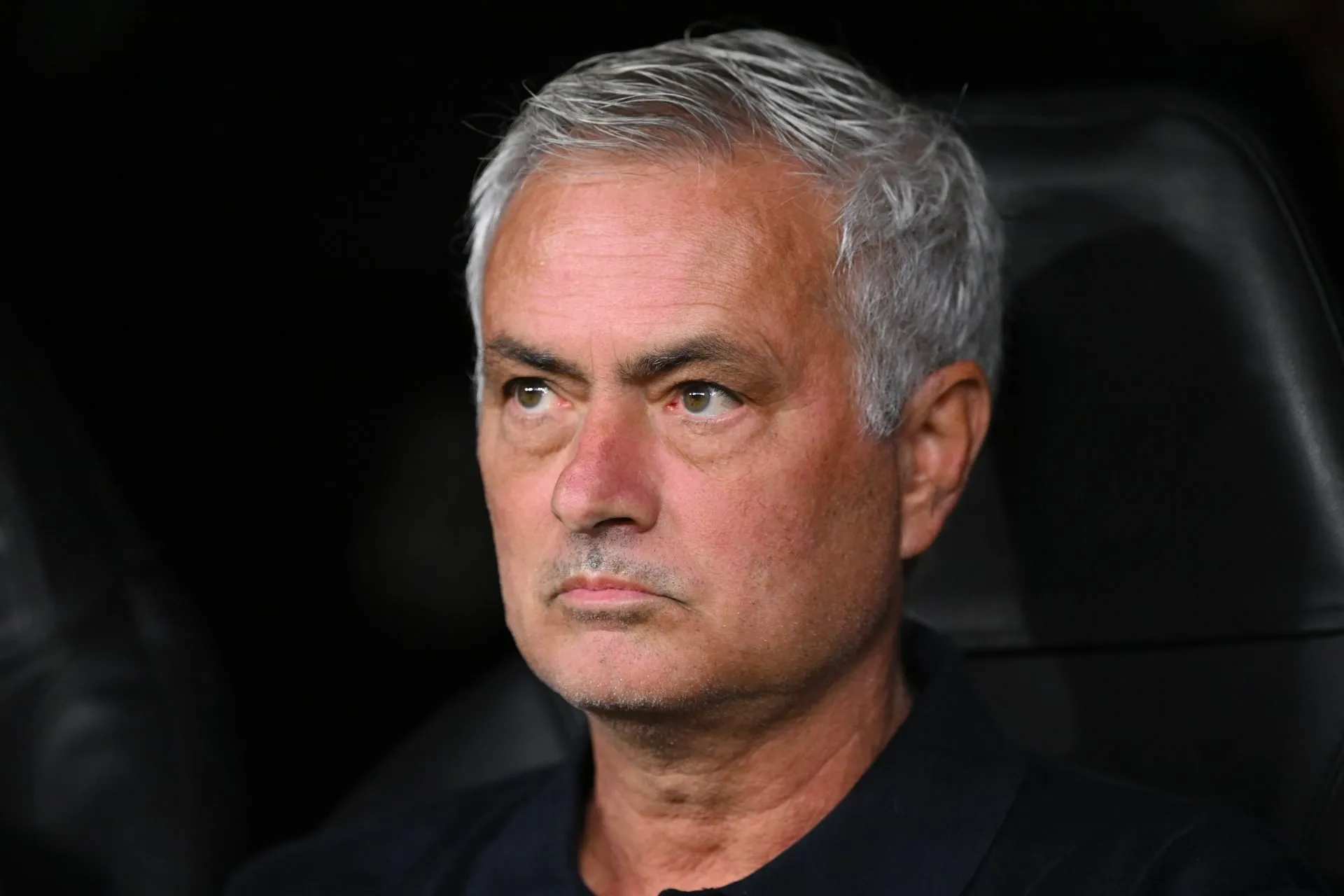
Real Madrid’s season, under the returning Jose Mourinho, has not started as expected at the club.
In terms of results, eight matches have produced six wins one draw and two defeats in all competitions. Both losses have come in La Liga (five wins), leading to the Merengues occupying the fourth place in the table.
Meanwhile, arch-rivals Barcelona have maintained a perfect winning record riding on their relentless goalscoring form, opening up a six-point lead at the table.
Mourinho is using the international break to analyse what has gone wrong and what can be improved. And, several metrics and statistics show that Real Madrid has significant room for improvement.
As highlighted a few days ago, Real Madrid are the team that covers the fewest kilometres per match in La Liga on average, at 96.5, almost ten fewer than Barcelona’s 104.5. Los Blancos are also second-bottom for high-intensity runs per match, with 394.
Possession and defensive numbers
There are further figures suggesting that Real Madrid could be doing more in terms of off-the-ball efforts and defensively.
Real Madrid also happen to be the team that commits the fewest fouls, with 59, fewer than half Espanyol’s 120, yet it is also the team that has been fouled the most in La Liga, with 97.
In terms of recoveries, the Spanish capital giants rank 16th with 302, 38 fewer than Barcelona, while they are also near the bottom for interceptions, ranking 17th.

One argument could be that these figures indicate that Real Madrid are dominating games more often than they are dominated, leaving fewer opportunities to be aggressive without the ball.
However, the numbers do not particularly support that theory either. Real Madrid average 52.3% possession, only slightly more than half.
That is a long way behind Barcelona’s 68.7% and also below Villarreal at 61.4%. Even Atlético Madrid (59.1%) and Real Betis (53.6%) outdo the Merengues.
That possession also allows Barcelona to protect themselves more effectively. The Catalans have conceded just 51 shots, including 22 on target, while Real Madrid have faced 89 shots, with 31 on target.
Finishing not up to the mark either
Real Madrid can improve defensively, but the attacking numbers also reveal significant room for growth.
The biggest issue is finishing. The Merengues have scored 18 goals, 13 fewer than Barcelona’s 31.

That is despite the two teams having taken a similar number of shots: Barça have attempted 150, compared with 131 for Los Blancos. The difference is even smaller when looking at shots on target, with 58 for Barcelona and 53 for Madrid.
Barcelona’s players score once every 1.8 shots on target, while Real Madrid stars needs almost three.
The contrast is particularly clear when comparing the leading scorers for both teams, Raphinha and Kylian Mbappe.
The Brazilian has scored 12 goals from just 25 total shots and 16 shots on target. Real Madrid’s No. 10, meanwhile, has scored seven goals from 41 attempts and 22 shots on target.
The numbers clearly show that Real Madrid have a lot of work to do, both in defence and in attack, if they are to close the gap to the top.
Source: AS