Features
Ranking all Real Madrid players at the 2026 FIFA World Cup from worst to best


Real Madrid had ten players from last season’s squad called up for the 2026 FIFA World Cup with the highest representation going to France and Brazil who had two players apiece.
The club also made three signings at the start the World Cup in Ibrahima Konate, Marc Cucurella and Bernardo Silva, all of whom participated in the premier competition and had minutes.
Needless to say, however, the competition gave serious joy to some players while others suffered heartbreak and pain early on in the competition.
The tournament in North America was filled with controversy and shocks and saw top-contending teams drop out all along the way.
Eventually, Real Madrid had a solid representation in the semifinal stage but a very thin attendance in the final.
Madrid Universal brings you a list of Real Madrid’s players in the competition and how they fared, arranged from the biggest disappointments to the biggest successes.
13. Bernardo Silva
While fans were overwhelmed to hear of Bernardo Silva’s sudden move to Real Madrid, his World Cup campaign arrived as a massive disappointment as the player failed to live up to the hype.
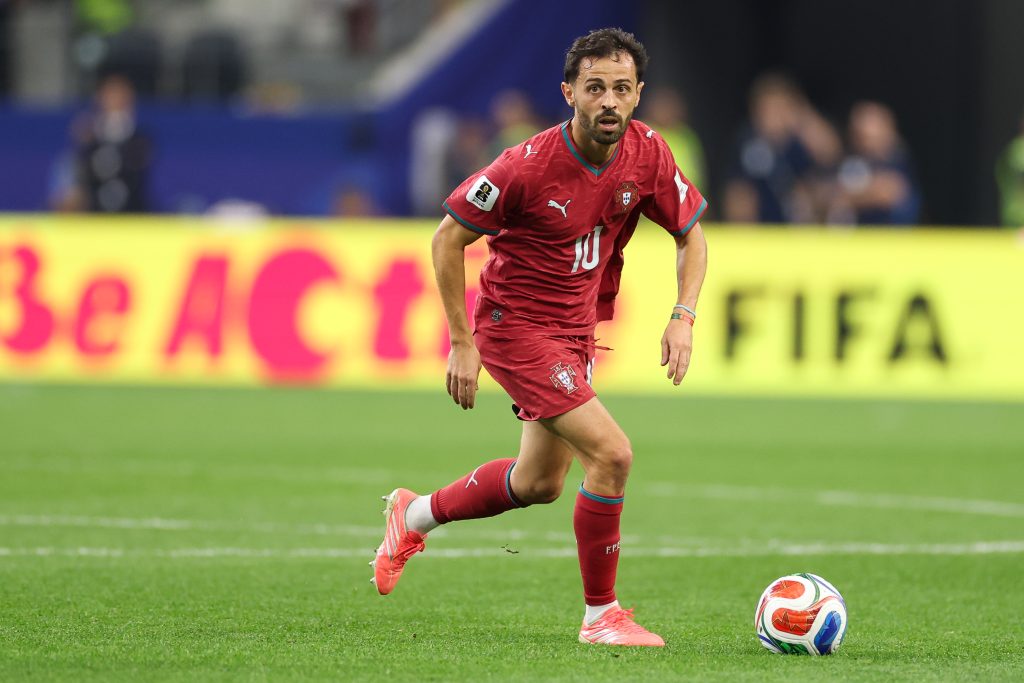
He was positioned as one of Portugal’s creative architects but lost his starting spot immediately after the team’s opening clash against DR Congo. He failed to keep up the tempo under physical pressure and never really switched on his creative side.
As the tournament progressed, he became restricted to a bench presence with fringe minutes which was embarrassing for a player of his caliber.
His overall World Cup campaign, thus, was disappointing considering that he did not even produce much impact when handed minutes off the bench.
12. Ibrahima Konate
Ibrahima Konate’s role in the World Cup was largely limited to the bench as the player did not see many minutes sitting low on Didier Deschamps’ pecking order. His first minutes were the 14 minutes he came off the bench for against Norway.
His first start in the event eventually arrived in France’s third-place clash against England, and the game could not have gone any worse for the new signing.
Konate started the clash and was taken to the cleaners in the first-half by England’s forwards. He was directly involved in the goals with positional lapses in the goals scored by Declan Rice and Bukayo Saka and was taken off at half-time.
His campaign, thus, was headlined by a lack of game time and a disastrous lone start – both of which will bring him to Madrid in a rather poor state of mind.
11. Federico Valverde
Valverde was another player who grossly failed to live up to the expectations pinned on his shoulders. Uruguay shockingly crashed out in the group stages, and the Real Madrid star did no better than any of his teammates.
The player was the fulcrum of Marcelo Bielsa’s high-pressing system but never came good in the competition. He struggled to maintain control in midfield, nor did he create chances for the attack. Most importantly, his pressing was also not up to the mark.
Added to his struggles on the field were the internal clashes between the players and the manager which led to disarray during the most important tournament in the game. Valverde was said to be leading that mutiny which does not paint a good image.
All in all, the player will be mightily disappointed in himself for his performances and decisions, and he finishes as one of Real Madrid’s big flops at the event.
10. Arda Guler
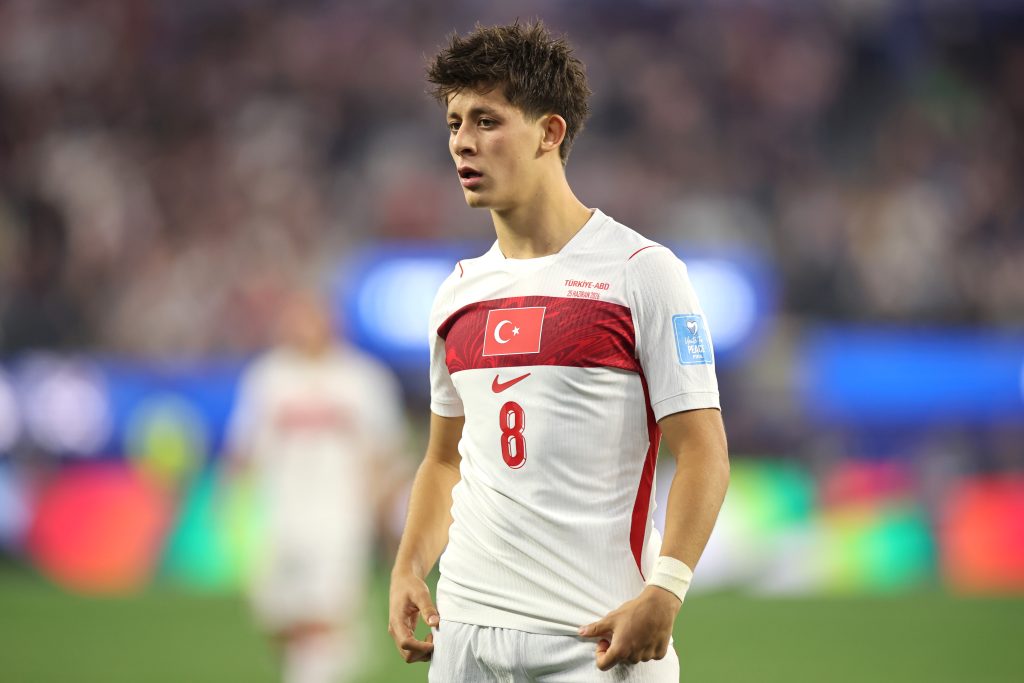
Guler was the biggest star in Turkey’s World Cup squad and was the unsaid leader of the team’s first campaign in the event since 2002.
Positioned as an attacking midfielder, Vincenzo Montella put up a system that worked around Guler’s creative ability, entrusting him with the massive role of churning up chances.
Guler, however, simply did not adapt to the physicality and chaos around him and often looked isolated on the field. He never really unfurled his wings and looked like a shadow of his Real Madrid version.
He did, however, get one goal in the tournament which arrived in the game against USA. By then, however, the damage had already been done.
9. Antonio Rudiger
Rudiger was one of the veteran leaders in the German national team and began the tournament as a substitute with regular minutes off the bench.
When Nico Schlotterbeck suffered a tournament-ending injury in the team’s second game, however, Rudiger took over the responsibility and stepped into the role of a starter for the games to come.
Despite his dominance and solid defensive efforts, however, he and his side struggled against Paraguay’s physicality and disruptive style of play.
Rudiger’s performance in the game that caused Germany’s elimination was not poor, but the team’s early elimination pulls him down the ranking simply because he was a starter in just two games. On an individual level, however, the veteran was rock-solid.
8. Aurelien Tchouameni
Placing a World Cup semifinalist in the bottom half of the ratings warrants justification, but Aurelien Tchouameni’s performances and fitness concerns severely scarred the player’s image and valuation.

The Real Madrid midfielder entered the event as a regular starter in Deschamps’ double-pivot alongside Adrien Rabiot, and looked comfortable in that pairing in France’s opener.
However, fitness concerns prevented him from facing Iraq in the group stages and subsequently made him miss the game against Paraguay in the Round of 16.
Despite being fit for the quarterfinal, Deschamps started Tchouameni on the bench for the clash against Morocco and France did well to dominate that game. All signs then pointed to the manager dropping the Real Madrid star for the semifinal as well.
Instead, Deschamps handed the Real Madrid player a start under pressure against Spain, and Tchouameni made a mess of the middle of the park.
He never really understood the tempo of the game, came under immense pressure when on the ball, and allowed Spain to dominate possession and dictate the flow of the game. France lost the game in midfield, and Tchouameni had a massive role to play in the same.
7. Endrick
Carlo Ancelotti’s decision not to hand Endrick minutes in Brazil’s opener set off a series of creative memes on social media, but the manager handed the player his debut and fringe minutes in the team’s next two group stage games.
While his minutes were limited, the player was sharp, inspiring and resourceful in the few touches of the ball he received.
His standout moment, however, arrived against Japan in the knockout stages when he came on for the entire second half and improved Brazil’s attacking intensity. His hold-up play and runs destabilised the Japanese defence, allowing Brazil to mount a comeback.
He again came off the bench against Norway and improved the team’s attacking output, even creating a massive chance but failing to take it. All in all, his cameos were sharp throughout and will give Real Madrid a good feeling.
6. Thibaut Courtois
Thibaut Courtois was rock-solid in goal throughout the event, as he has always been for Real Madrid over the years.
One of his standout performances arrived against Iran in Belgium’s 0-0 draw, especially considering that his side were down to ten men in that game.
He was again critical in Belgium’s nail-biting 3-2 comeback over Senegal, keeping his side in the game with critical and timely saves. Against the United States, he was again composed and calm in goal with a routine outing.
Against Spain, the player made four saves and then left the field with a niggle and was not on the field for the champions’ eventual late winner that saw his side knocked out.
5. Brahim Diaz

Following Morocco’s giant-killing run in the last World Cup, Brahim Diaz entered the tournament as the leader and top player of one of the competition’s biggest dark horses.
He played as an advanced playmaker in his team and was the creative force for the Moroccan attack, creating chance after chance with his vision and playmaking ability.
The Real Madrid star kicked off the tournament with an assist for his team’s only goal against Brazil in the opener. He then assisted his team’s only goal against Scotland as well, helping them move a step closer to the knockouts.
While Diaz did not directly have any goal contributions against the Netherlands in the Round of 32, he stepped up massively with two assists against Canada in the Round of 16 and helped his side reach a quarterfinal against France.
At that point, however, his campaign dipped and he could not produce any chances of importance against Kylian Mbappe’s red-hot side. With four assists in six appearances, however, his campaign was a positive one.
4. Vinicius Jr.
Vinicius was one of the only bright spots in Brazil’s underwhelming World Cup campaign and stepped up in attack for the team as long as they hung on in the competition.
He opened his campaign by scoring Brazil’s lone goal against Morocco and kept his form up with a goal and an assist against Haiti.
In the final group stage game, he scored twice and continued his stellar run of form, becoming the first Brazilian to score in all three World Cup group stage games since Ronaldo and Rivaldo in 2002.
Understandably, the player was more heavily marked and suffocated in the knockouts as opponents identified him as Brazil’s sole threat. He thus found it difficult to have a go at goal, both against Japan and Norway.
3. Marc Cucurella
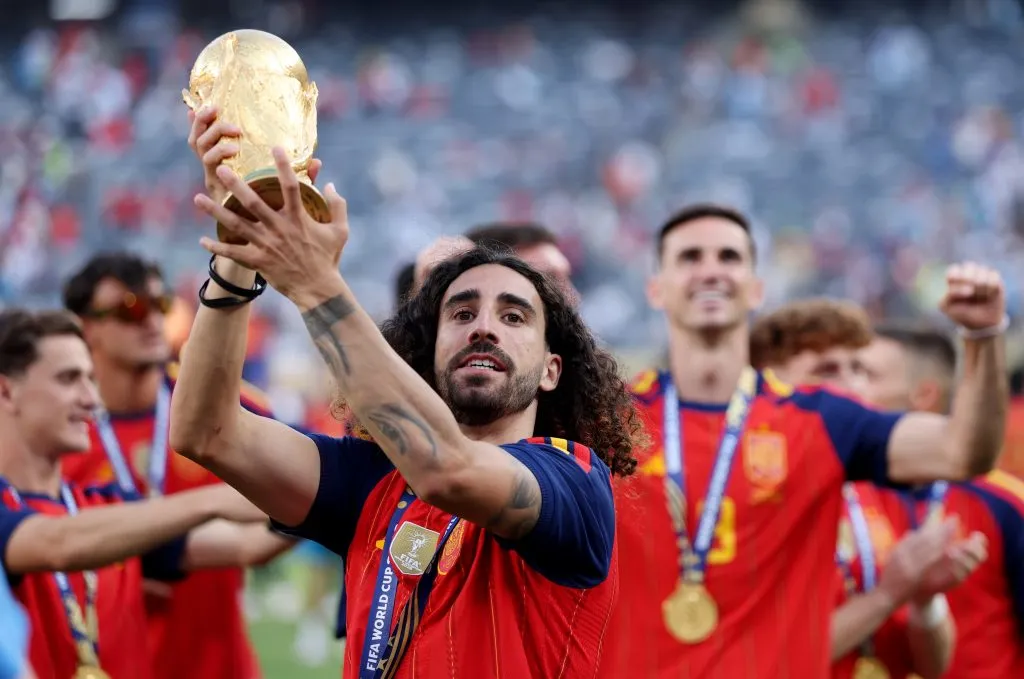
Marc Cucurella was not a Real Madrid player when the FIFA World Cup began, but his transfer was announced before Spain’s opener and the player played the whole tournament contracted to Los Blancos.
He finished the tournament as his club’s only champion, and was completely deserving of all the praise showered on him given his relentless and inspiring performances on the flank.
Cucurella was Spain’s starting left-back throughout the event and did well defensively to help the team to just one goal conceded all tournament.
Concurrently, however, the player managed to add significant attacking threat to Spain’s left-flank in Nico Williams’ absence, racking up two assists and making a menace for opposition defences with his notorious crosses.
2. Jude Bellingham
Bellingham finished the tournament not only as one of Real Madrid’s best-performing players but as one of the standouts of the competition as a whole, finishing with a Bronze medal and the Bronze Boot.
He was England’s biggest attacking threat and finished the event as the team’s top-scorer, even ahead of the mighty Harry Kane. His positioning and accuracy were impeccable, making him a force to reckon with in the final third.
Bellingham scored twice in the group stages, but burst to life in the knockouts when he netted back-to-back braces under pressure against Mexico and Norway in the Round of 16 and quarterfinal respectively.
He did not manage to find the back of the net in the semifinal, but was again on the scoresheet in the third-place game against France.

Considering his output, the pressure he performed under and his leadership, Bellingham was one of the best players in the competition.
1. Kylian Mbappe
Had Kylian Mbappe and France made it to the final, the player would have been one of the favourites to win the Golden Ball irrespective of the result. Such was the historic and record-filled campaign the Real Madrid star enjoyed.
The player ended the competition as the top goalscorer with ten goals, and it was often him who broke the deadlock for the side under pressure.
Mbappe had a brace of goals against Senegal, Iraq, Sweden and England and a brace of assists against Norway. He scored one penalty against Paraguay and the only game he did not have a goal contribution in was the semifinal defeat to Spain.
Finishing the tournament as the top goalscorer in the history of the World Cup and the Golden Boot, needless to say, sums up how the player has always been dependable in the high-stakes event.
While France may not have made the final, Mbappe was one of the tournament’s best performers by far and his consistency and reliability in attack was second to none. He is, at this point, an icon of the World Cup.

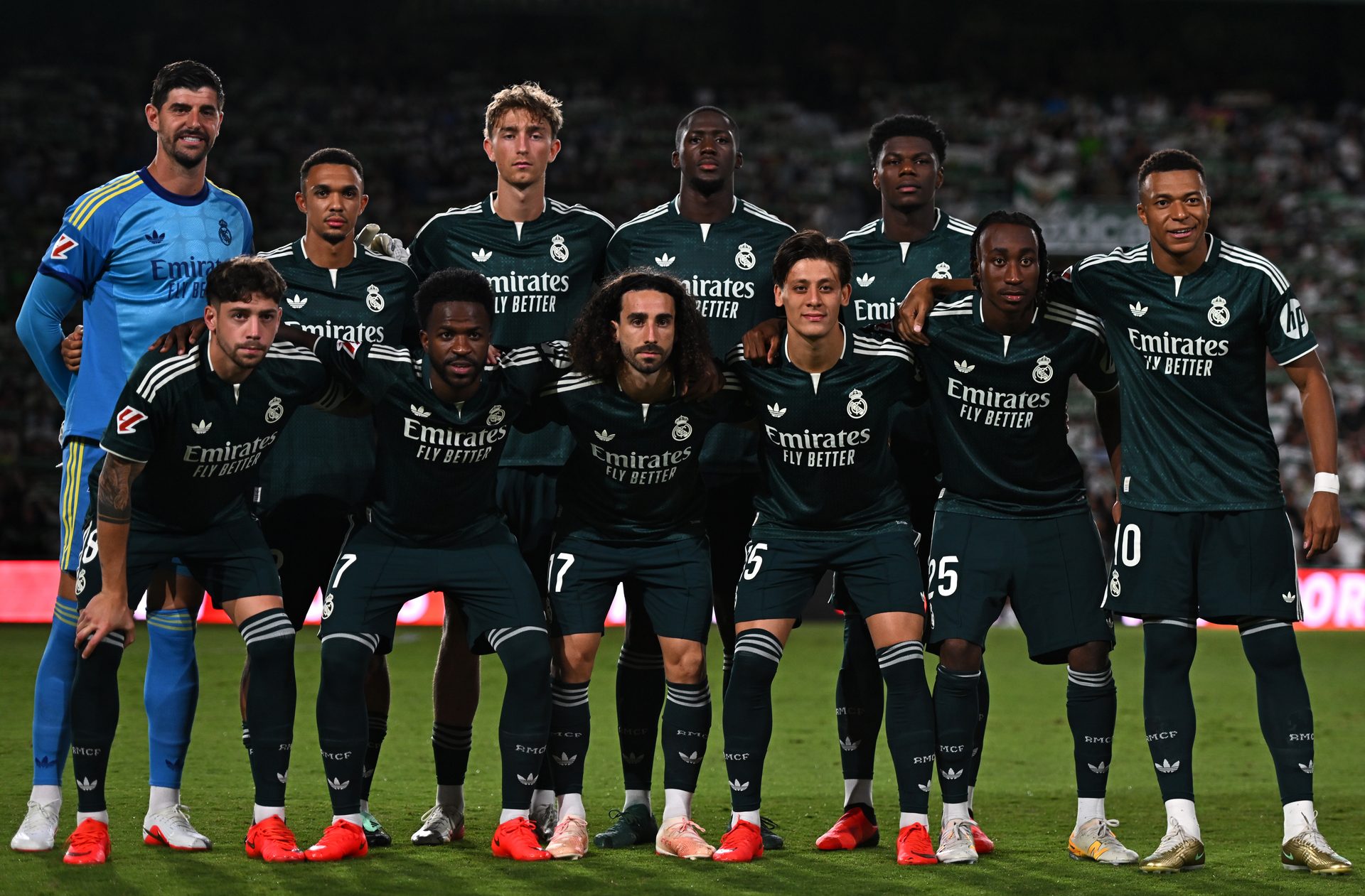
Real Madrid made a mess of their game against Elche last night, and it is clear that the men in white have several flaws with no answers at the moment.
From being 2-0 up, the men in white bottled their lead and threw the game into jeopardy by permitting Elche to score two goals. The result, as many saw it, was set to end in a draw.
With some persistent attacks in the dying minutes, however, Real Madrid managed to build pressure on Elche and eventually scored one more goal at the death to take home the three points.
Needless to say, however, the negatives from the game far outweigh the positive news of the three points.
Madrid Universal brings you three takeaways from Elche 2-3 Real Madrid.
Another second-half collapse
After Real Madrid’s win over Rayo Vallecano at the weekend, Jose Mourinho stressed the fact that Real Madrid actually played only one half and that the fatigue began showing after the break.

On the night, the opposition began to enjoy more dominance and create chances after half-time as they outran and outpressed Los Blancos to good effect.
Last night was no different, and the second half went completely awry.
The men in white entered the half-time break cruising with a 2-0 lead and significant dominance over the proceedings. They had a massive xG, with Elche barely creating any chances of note.
After the break, however, the entire dynamic of the game changed as Real Madrid took a step back and handed the impetus to the hosts. Pressing high and attacking without fear, Elche dominated Real Madrid for most of the second half and had a staggering 60% of possession.
They scored twice – in the 71st and 83rd minutes – and equalised Real Madrid on the night. Given the visitors’ shambolic display, it was deserved for Elche.
At this point, the constant second-half collapses and fatigue struggles of the team after just 45 minutes of action must worry Jose Mourinho immensely. Heading into a derby away from home, Real Madrid have to do much better.
The away curse continues
While Real Madrid’s form at home has been imperious this season, their form away from home has been equally shocking.
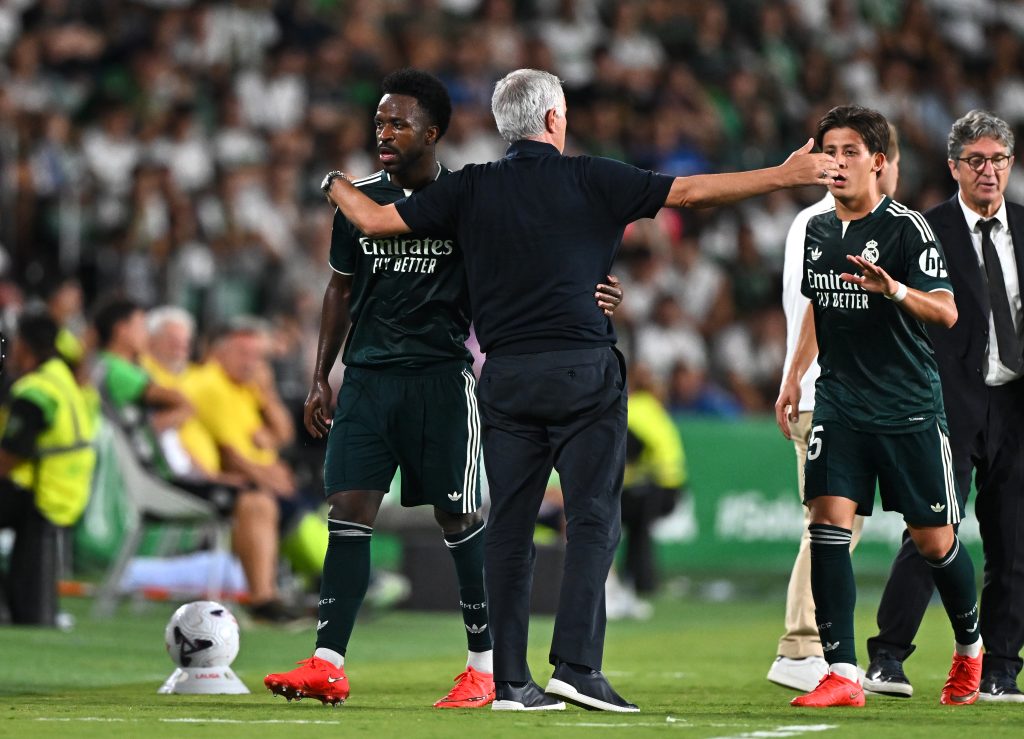
They began their season with a last-minute win over Espanyol, and their second league game of the season on the road came against Real Betis and ended in defeat.
Heading into their third away game last night, there was an element of worry about how they would perform, and the trend continued once more.
Real Madrid did well to take the lead on the night, but they made the second half a massive war and far more difficult than it should have been.
At this point, serious questions have to be raised about Real Madrid’s form on the road and their inability to keep games under control when playing in away stadiums.
Heading forward in the season, Los Blancos have some massive away games coming up against far more difficult opposition. The Madrid derby is up next, and the team’s form is nothing promising heading into that fixture.
Carlos Espi saves the day… again!
Real Madrid are currently on 15 points after six games in the league, but Carlos Espi has directly contributed to a massive chunk of that.
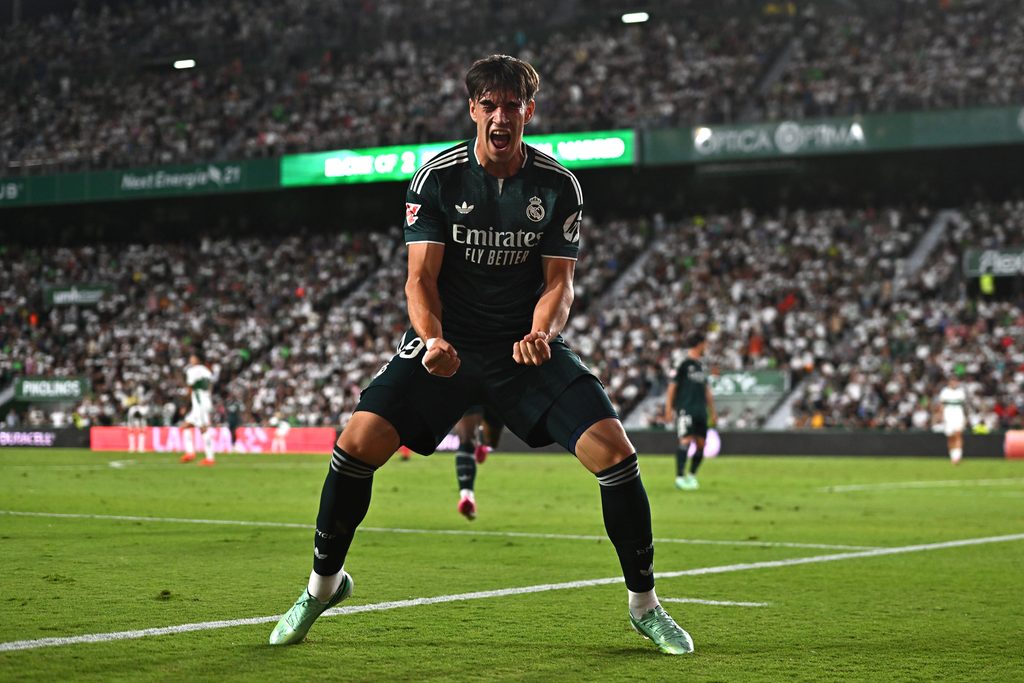
If not for the new Spanish striker’s ability to come up clutch in big moments, Real Madrid could well have been on just 11 points at this stage in the season, and the four points he has added are absolutely crucial.
Against Espanyol, it was Espi who scored a stoppage-time winner to hand Real Madrid all three points after a complicated match. Last night, he repeated the same heroics once more.
With the team staring at a draw, the new signing was at the right place at the right time to bury Kylian Mbappe’s assist in stoppage time, handing Real Madrid all three points at the death.
He may not have played a large part on the night, but his cameo was again powerful and it is clear that he elevates the team’s attack and provides new solutions in front of goal. Espi has already proven his talent, and his ability to perform under pressure is what makes him special.