Real Madrid News
Fede Valverde, Nacho react after Osasuna 0-2 Real Madrid: “Knew how to suffer together”


The spirits are high in the Real Madrid dressing room after sealing a hard-fought 2-0 win over Osasuna on Saturday night. After all, it required a combined effort from all of Carlo Ancelotti’s squad members to guarantee the Merengues three points against a well-oiled opposition.
Following the high-intensity clash, Federico Valverde and Nacho Fernandez faced the press and spoke about various aspects of the game in depth including the altercation between Vinicius Jr and Moi Gomez. Here are the snippets of the goalscorer and the captain’s media interaction.
Valverde began his conversation with the media with a description of the gruelling ninety minutes the team had to endure in Pamplona. Further, he maintained that El Sadar is never an easy stadium to play at.
“We knew it was a tough game. They always fight until the end on their home turf. They always look for long balls and sometimes it’s hard to find space. As the minutes went by, the fatigue of the numerous games we’ve played this season also began to take their toll.”
After 78 hard-fought minutes, it was Valverde’s goal that blew the tie wide open and gave the visitors the lead. Speaking about his goal and the team’s performance, he said:
“I think the goal I scored opened up the game and that’s when we found the spaces a lot more. We are happy with all the work from our teammates and for the humility they displayed in the match. We knew it was very difficult and we knew how to suffer together.”
Ancelotti initially set a ten-goal target for the midfielder which he achieved in Real Madrid’s win in the Club World Cup final. Valverde then revealed that the target had now doubled, although he doubted if it was feasible for him to breach that number.
“I’ve been told that I can reach 20 goals, I think they’ve gone too far with that number though. I try to do my best and obviously scoring is a great boost to your morale. Playing on the outside you always have a very close marker and I try to play one-on-one, but it’s not my strong point.”
The 24-year-old began the season as a midfielder under Ancelotti. However, he has been pushed to the right wing in recent games and has done phenomenally well in the foreign position. Commenting on his preferred position, he explained:
“Being in the middle I can get closer to the area, sometimes the midfielders don’t follow you one hundred percent. I have to find my spaces and take advantage of them, like I did for the goal. That’s what the coach asks me to do.”
Ancelotti is well known as one of the best coaches in the world for bringing the best out of his players. Valverde stood by the same fact and elaborated on how Ancelotti’s mind games with him were instrumental to his success.
“I’d like to thank Ancelotti for that pressure he’s put on me, even if it’s just a little game between the two of us. In my mind, it plays a part in my decision-making. I would often find other options to pass because
“I didn’t have the confidence to go for goal. Now, the first thing I do is look towards goal. I know 80% can find the back of the net so I definitely look to score more these days.”
Nacho Fernandez started the game with the captain’s armband and played as a right-back for the 75 minutes that he was on the field. Going up against Barcelona loanee Ez Abde, the veteran faced a stiff challenge and explained the frustration the game had in store for him when he spoke to the media.
“It was a tough game. We knew it would be like this at a tough place to come, but we’ve taken three big points to stay in the fight. I was shown a yellow card for dissent, silly things that I should have avoided. Sometimes the tension of the match gets to you.”
Nacho then went on to share his thoughts on the duel between Vinicius Jr and Moi Gomez that saw both players earn yellow cards. Speaking on the verbal altercation, the defender said:
“As I said before, it’s in the heat of the moment. They squared up to each other a bit and they were both shown yellow cards. These things happen in a tight game.”
Source: Real Madrid official website

Real Madrid News
Real Madrid forward Vinicius Jr. admits finishing problem after another frustrating night vs Elche: ‘Can’t miss that much’

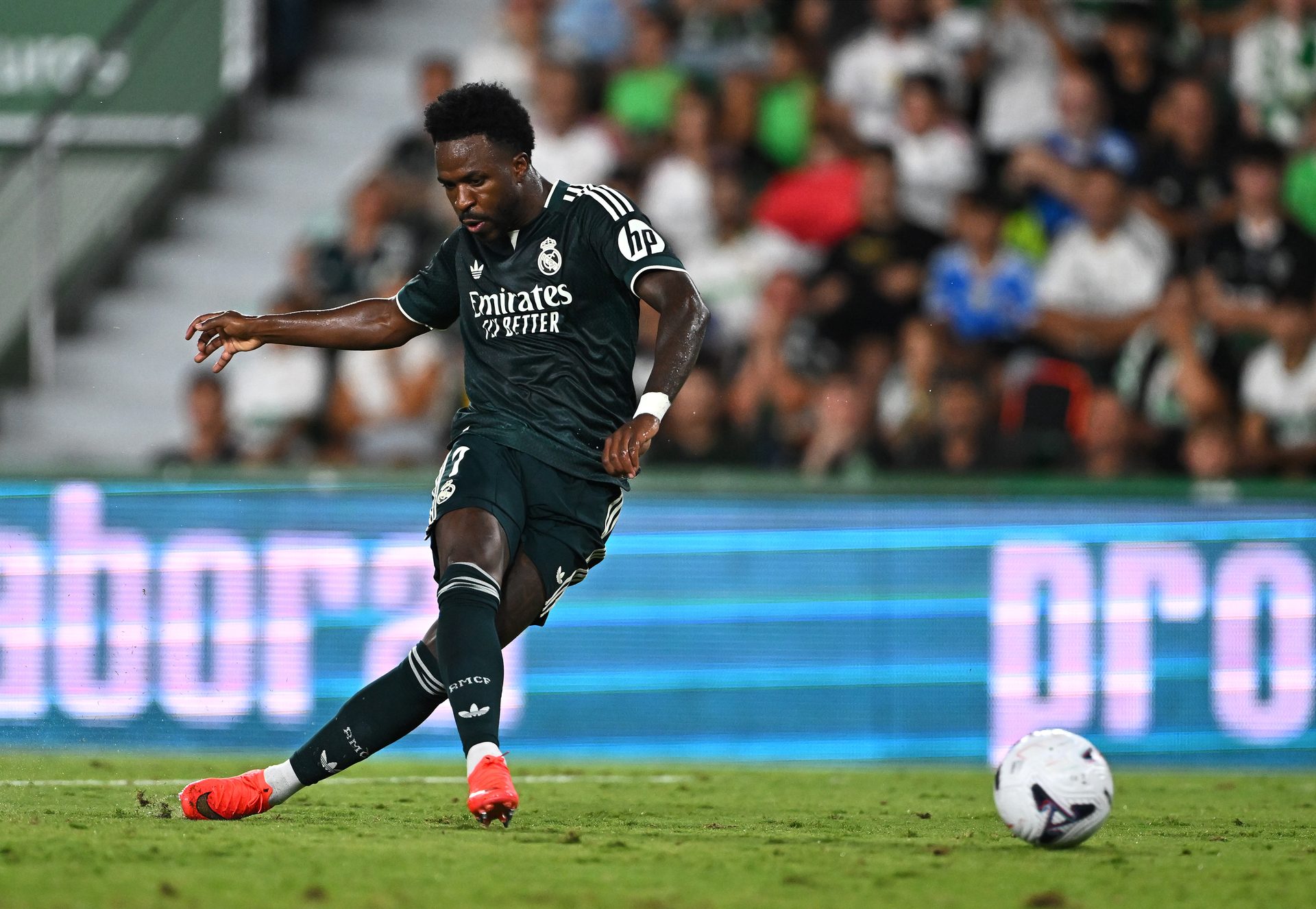
Vinicius Jr.’s difficult start in front of goal continued against Elche, and the Real Madrid forward did not need anyone to tell him he had missed another chance to make the difference.
The Brazilian finished the night without a goal despite having chances to get on the scoresheet, while his teammates could only watch from the bench as opportunities went begging.
Jose Mourinho had already identified the problem before kick-off, bluntly pointing to the issue facing his forward, stating, “He’s missing the goal.”
Vini offered an equally frank assessment afterwards.
Rather than hide from another frustrating evening, he accepted responsibility on social media: “The goals will come back; I can’t miss that much…”
Two chances, no finish for Vinicius
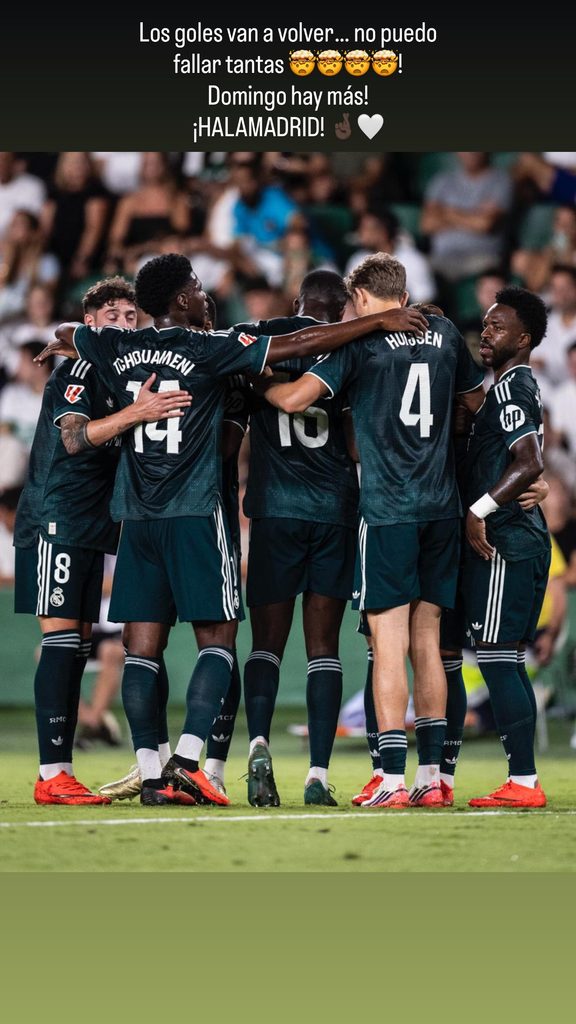
Vinicius had two particularly clear openings against Elche, but neither produced the finish Real Madrid needed from their star forward.
The first arrived when he found himself one-on-one with the opposition goalkeeper.
Instead of finding the net, Vinicius caught the ball with the tip of his foot and sent his effort wide. Arda Guler was available during the move and called for the ball, but Vini backed himself to finish the chance.
He had another opportunity after the interval, this time following an excellent pass from Guler during a quick Real Madrid transition. Again, though, Vinicius could not find the target.
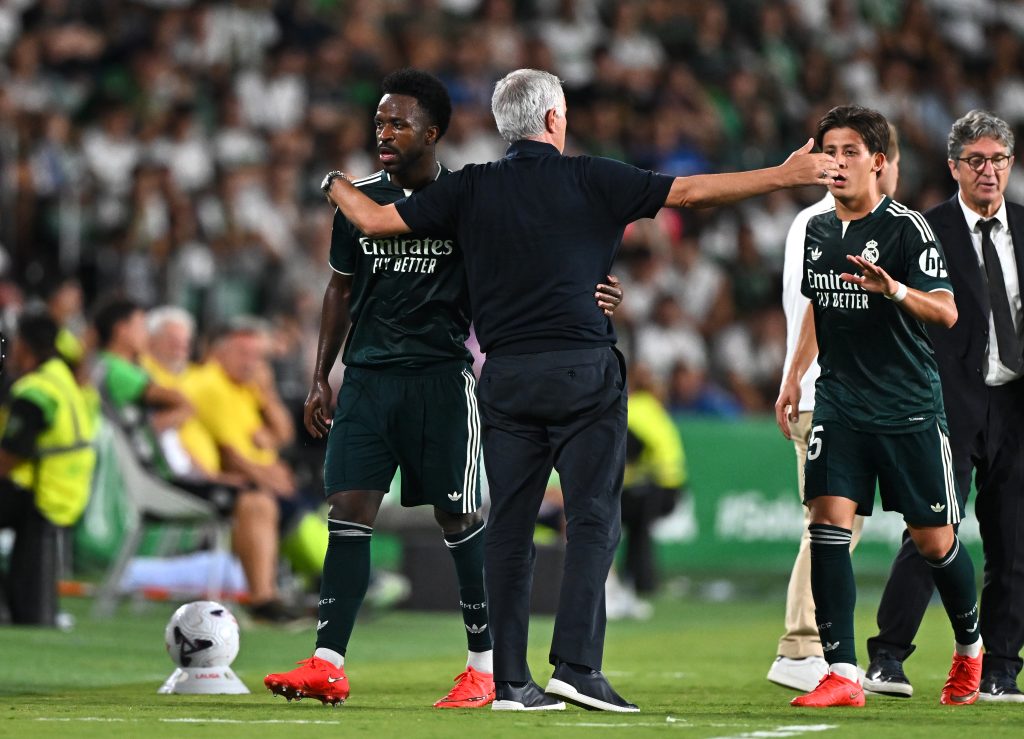
His evening ended in the 68th minute, with Mourinho deciding the Brazilian was tired and turning his attention towards Sunday’s Atletico Madrid derby.
Mourinho has a bigger decision to make
The numbers show why Vinicius’ finishing has become a talking point. He managed five shots against Elche, but only one was on target and none found the net.
After seven appearances this season, the Brazilian has scored just once, which is a striking return for a player Real Madrid rely upon to provide a major share of their attacking threat.
Ultimately, though, Real Madrid found another route to victory, with Arda Guler, Kylian Mbappe and Carlos Espi providing the goals in the 3-2 comeback.